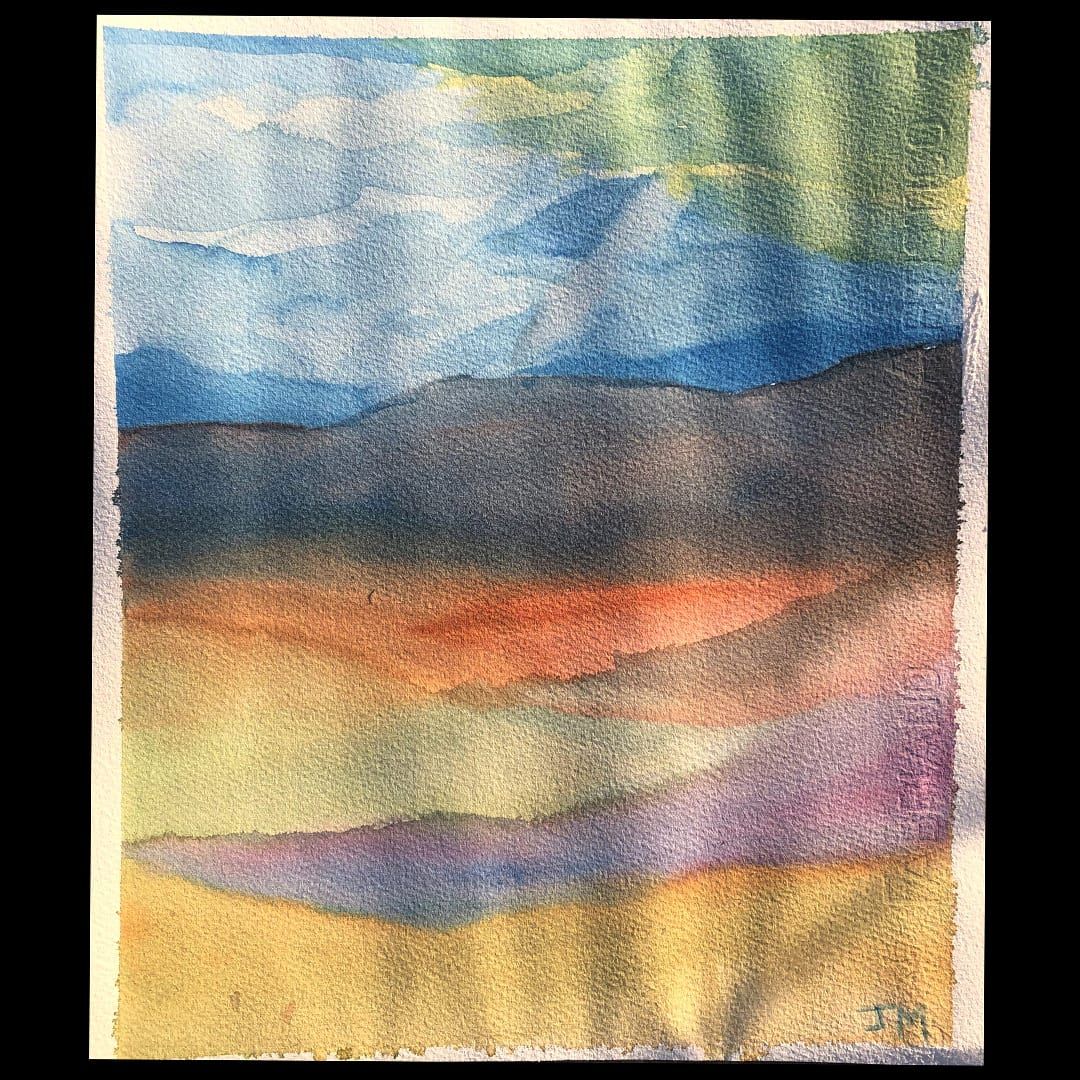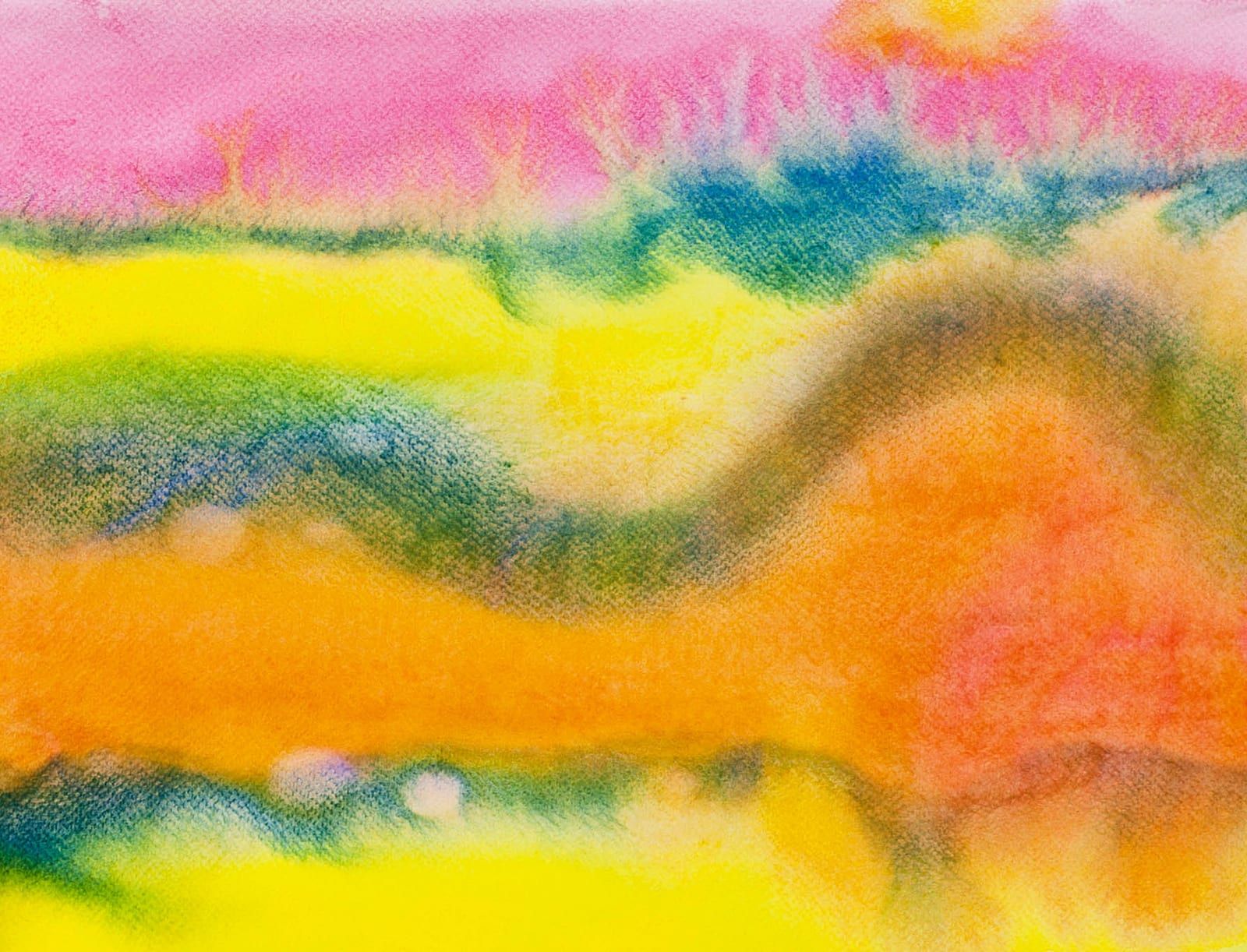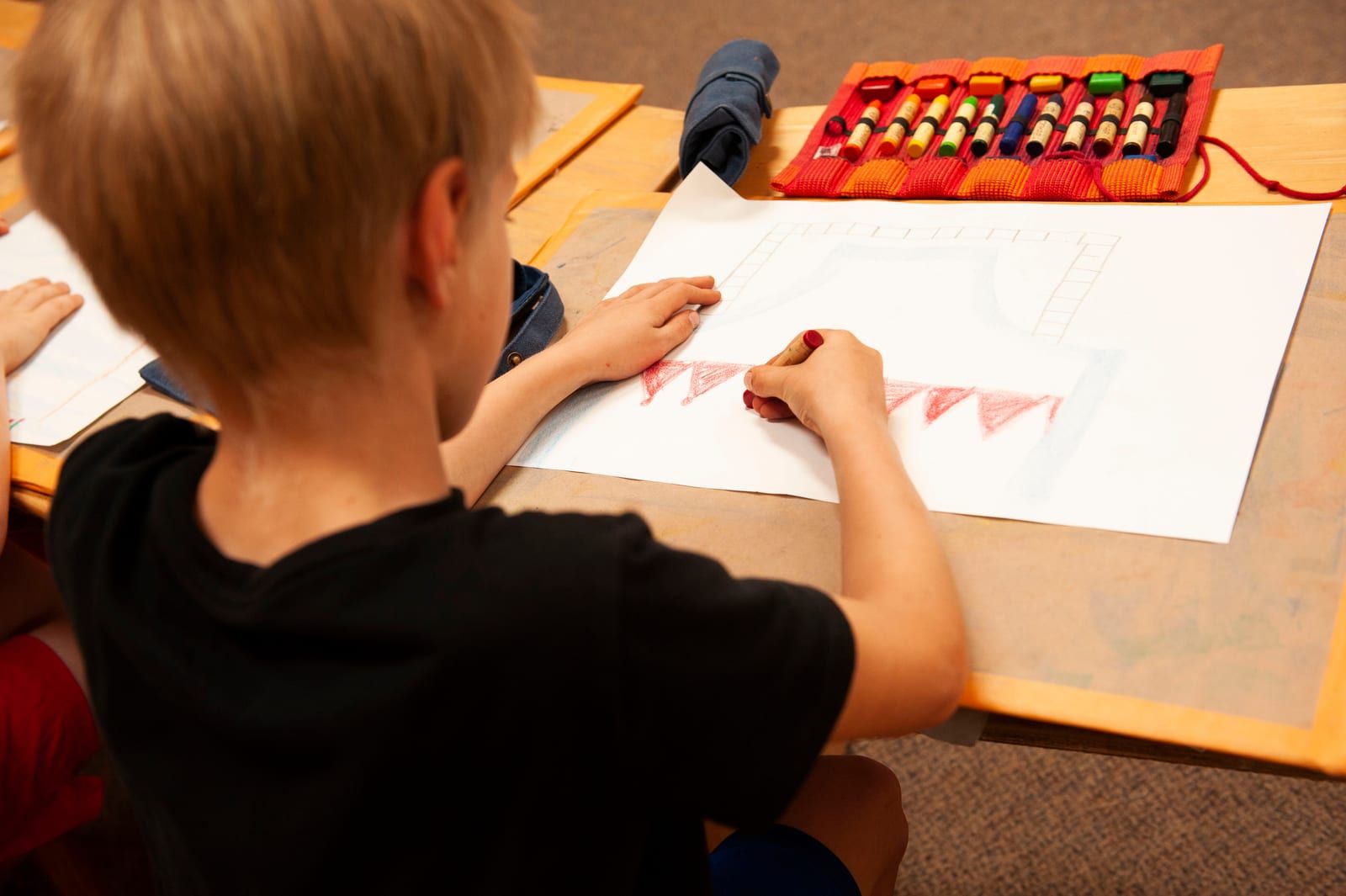
Arts and music are infused into Summerfield Waldorf School & Farm’s entire curriculum. Waldorf schools emphasize the importance of teaching in an artistic way, not so much to educate children to become fine artists or musicians but to feed the imagination, to deepen empathy, and to develop freedom in thinking. The practice of "making" awakens our intelligence to the full experience of being human.
Experiential learning at its best.
Summerfield Waldorf School & Farm has many unique programs to offer our students in early childhood through high school. Arts of various disciplines, music, practical & fine arts, and drama are an integral part of our year-round curriculum.
“Our highest endeavor must be to develop free human beings who are able of themselves to impart purpose and direction to their lives. The need for imagination, a sense of truth, and a feeling of responsibility — these three forces are the very nerve of education.”
— Rudolf Steiner
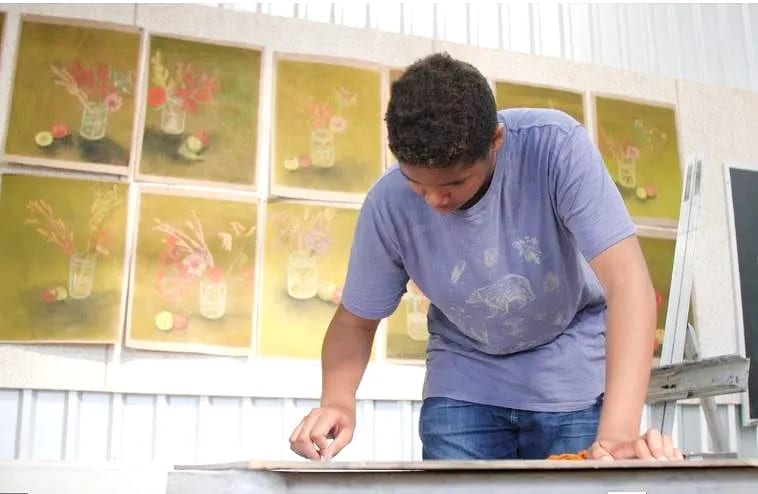
Arts
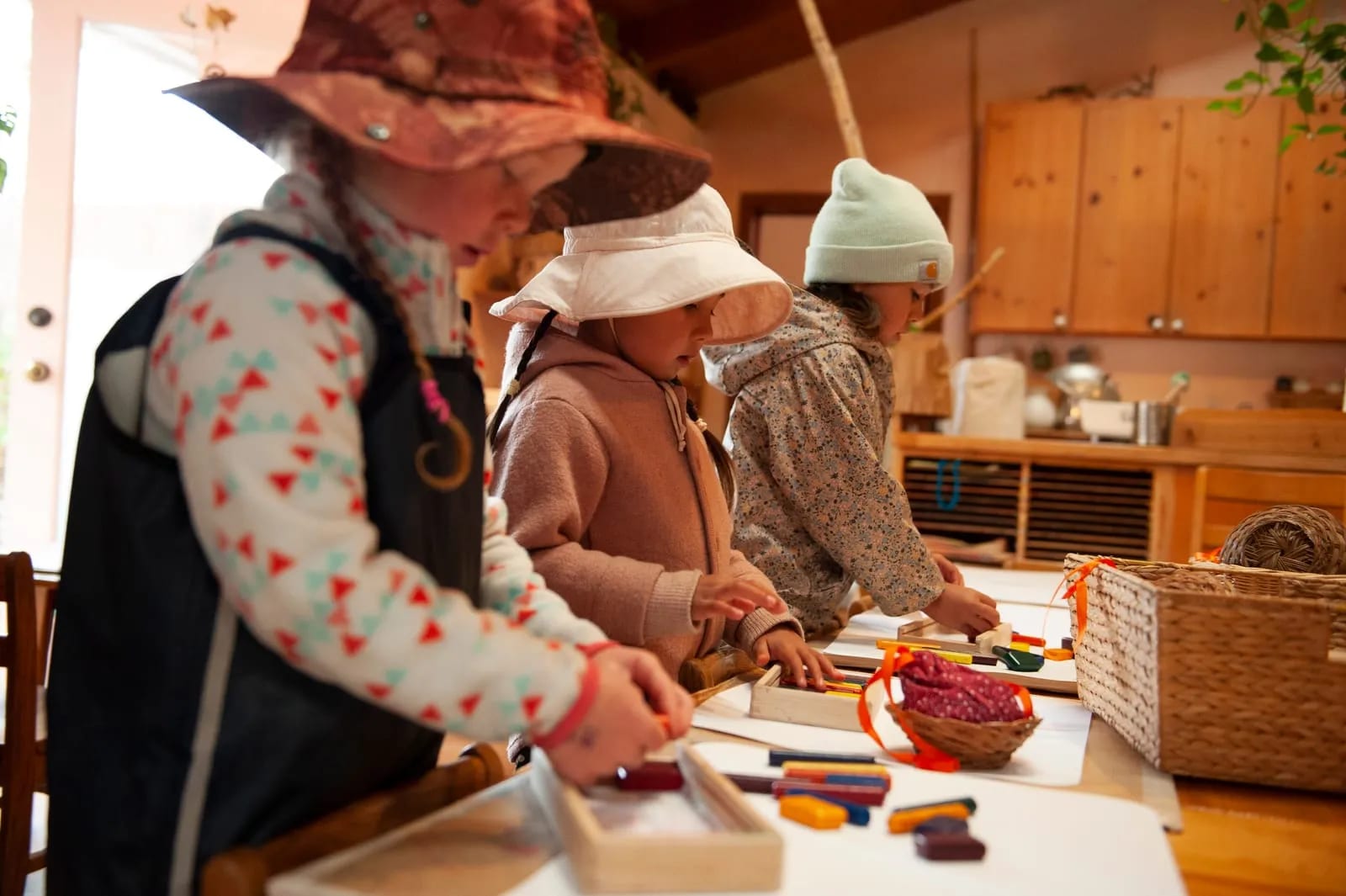
Chalkboard Drawing • Pastel • Watercolor • Plein air • Form Drawing • Sculpture • Oil & Acrylic Painting • Beeswax & Clay Modeling • Printing • Woodworking • Jewelry Making • Pottery • Blacksmithing • Auto Shop • Quilting • Knitting • Felting • Sewing • Basket Weaving • Loom & Hand Weaving • Classical/Contemporary Plays • Musicals • Prop Building • Stage Art & Design
The arts (visual, practical, and performing) are infused into Summerfield Waldorf School & Farm’s entire curriculum from preschool through high school. Waldorf schools emphasize the importance of teaching in an artistic way, not so much to educate children to become fine artists or musicians but to feed the imagination, to deepen empathy, and to develop freedom in thinking. The practice of making art awakens our intelligence to the full experience of being human.
Beginning with beeswax modeling, knitting, and watercolor painting in the first grade, to the form drawing and wood/metal/stone-working of the middle grades, and on to the more complex acrylic painting, block printing, book-binding and blacksmithing of the high school, all the class levels offer special artistic projects developmentally designed to keep the students’ minds, hearts and hands engaged.
The arts serve to illuminate the academic subjects in a way that enhances and provides relevance. The artistic capabilities developed in the students will builds confidence, aiding in all their life endeavors, as well as providing them with a nourishing connection to beauty and craftsmanship that can enliven their free time outside of their chosen career paths.
Music
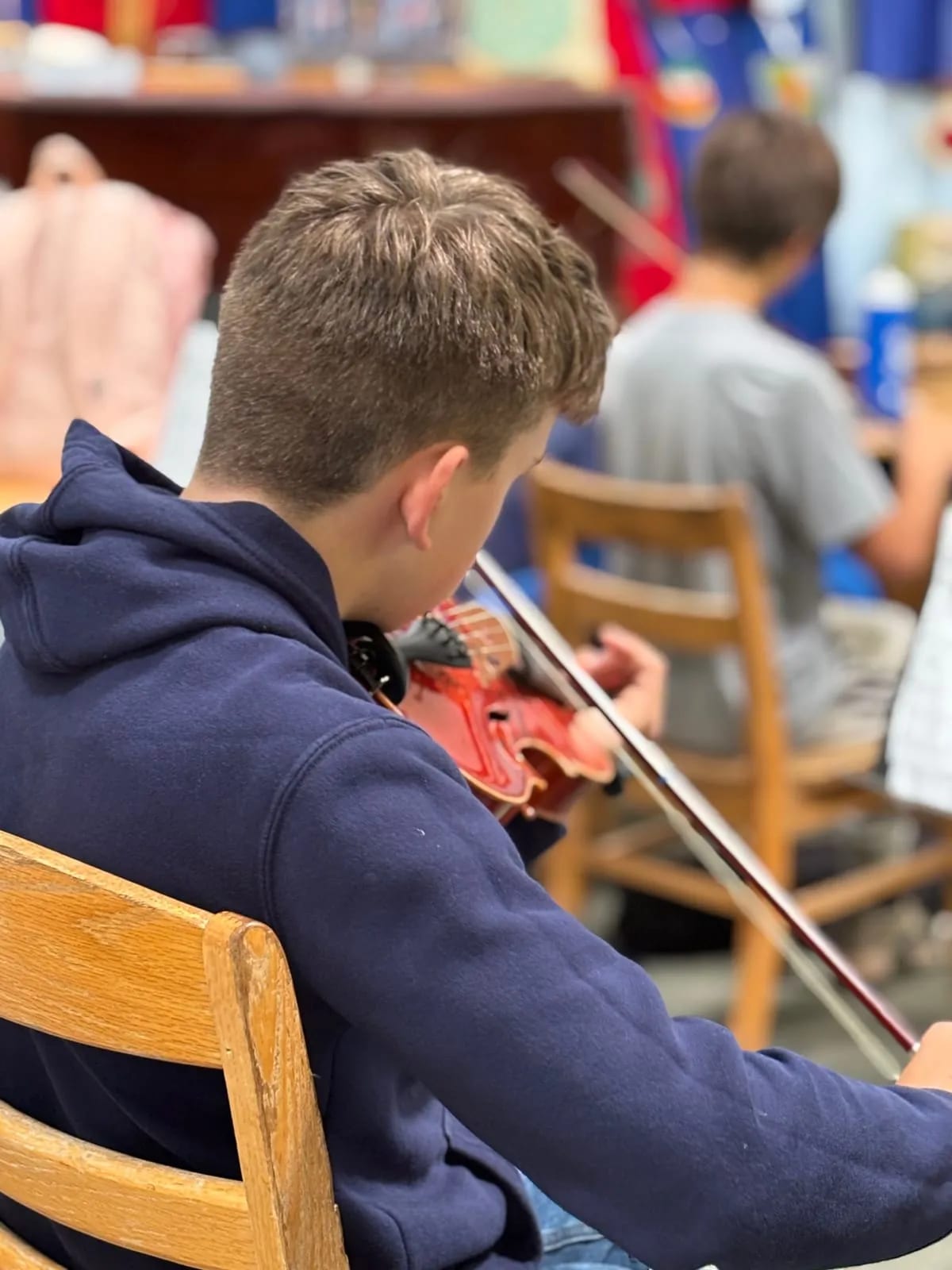
Recorder • Classical • Chamber • Orchestra • Choir
Music is an integral part of the life of our curriculum in our school, from Early Childhood to High School. It can be cross-referenced within almost every lesson and activity in the school day. Music develops our students in a threefold manner through a “hands, heart, and head” approach and manifests in both the “feeling” and “physical” realms. Our rationale and mission is that every child should experience playing a musical instrument because it helps to harmoniously form the child for the rest of his/her emotional, mental, and spiritual experience, and in addition, supports critical thinking, communication, and academic skills.
By studying music collectively in its three elements: melody, harmony, and rhythm, this holistic approach allows for a deep exploration of each element throughout the grades – the degree of difficulty in the curriculum progressing as the students gain understanding in music theory, hands-on learning/practice, and confidence. We bring music into the feeling realm through melody and harmony and then into the physical realm through studies in rhythm and performance. This purposeful sequencing of theory & composition, practice, and presentation unveils music’s innate connection to us purely as a human art form, living in every aspect of the body.
In the Lower School, our students participate in learning an instrument beginning in Grade 1. From Grade 3 to Grade 8, the students will have two periods of classroom music and singing. When our students reach High School (Grades 9-12), they will have two music electives per week, choosing from choir, guitar (American Music), or chamber music ensemble. Throughout all the grades, our students perform in concerts and other school related events during the school year to build their skills and stage presence, and most importantly, to experience the joy of sharing their musical artistry as an expression of their individual unfolding of their unique talents and gifts.
Music curriculum by grade
Grade 1 (Age 6-7)
In first grade, the children sing daily, in unison, with their class teacher, drawing from simple pentatonic melodies. Songs come from the changing seasons, festival life, and stories told by the class teacher. Each child has a pentatonic flute and learns all music through imitating the class teacher.
Grade 2 (Age 7-8)
Second grade music is a continuation of all offered in grade one, with the addition of once-a-week music class with the music teacher. Pentatonic songs, and call/response themes help further develop listening skills. Songs are still presented in unison and are learned through imitation. Our school has 15 pentatonic lyres, and the children work with these for a season. This is the beginning experience of a non-bowed string instrument for our students. Children learn posture, strumming technique, and listening skills.
Grade 3 (Age 8-9)
Third grade children move to the diatonic flute and work mainly in the C-major scale. Around the middle of the school year, the minor scale is introduced in conjunction with the rich Hebrew story-telling curriculum. Music theory is approached with much imagination, as the children make their own music books throughout the year, learning about basic notes and beats, rhythms, the music staff treble clef. The round is introduced, and thus the children’s first experience of two-part singing. All children have both a music class and two violin classes each week.
During this first year of violin instruction, students learn basic postures and techniques of the left and right hand and combine this rudimentary technical study with the study of music notation. This allows students to read music on sight together both in unison and in canon. Solfege is introduced during classroom music.
Grade 4 (Age 9-10)
Fourth grade students continue to study the violin and are expected to take on more responsibility to practice at home. This independent work in addition to class work lays a foundation which allows the children to play music with two separate parts to create harmony. During classroom music, the students practice reading and notating more complicated rhythms and melodies in order to become more musically literate. The children begin to deepen their music reading skills through their classroom music class, composing their own rhythms and singing solfege exercises.
Grade 5 (Age 10-11)
In fifth grade instrumental music, students are allowed the opportunity to switch to viola or cello pending approval from the music teacher. Children play music in two and three parts, allowing them to learn how to play music in an ensemble with multiple instruments. Students are introduced to the minor scale both on their instruments and in classroom music classes, and learn to read music in bass clef as well as treble clef.
Grade 6 (Age 11-12)
Sixth grade instrumental music class is effectively a beginning orchestra. The students learn how to play in a group setting, learning skills that are needed to make a large sound, and how to work in a group where each student has to sacrifice the lead melody and bring out the richness of the harmonies. This is a wonderful opportunity for the class to grow together socially as well as musically. During their classroom music period, students continue to practice solfege exercises, study music theory, and take simple melodic dictations.
Grade 7 & 8 (Age 12-14)
Seventh and eighth grade students all participate in G 7-8 orchestra and G 7-8 choir, each of which meets twice per week.
During orchestra, students practice playing in an ensemble with four independent parts and learn to play together while also following a conductor. It is expected that students practice their parts at home so that class time can be spent focusing on the character and the style of each piece rather than learning each part during class.
During choir, students sing in three part harmonies and learn to apply the sight-singing skills they developed during their classroom music classes to the practice of ensemble singing. The G 7-8 choir often performs for school functions.
Grade 9-12 (Age 15-18)
Music represents a core part of the curriculum as every student in the high school is enrolled in a music class. Students are offered the choice between High School Choir, American Music/Acoustic Guitar, and the High School Chamber Ensemble. Students are encouraged to continue with their lower school instruments whenever possible.
By offering a choice between three music classes, we aim to help students to develop musical proficiency from both a technical, social, and emotional perspective as they learn to collaborate, communicate, and share their work in an environment designed to foster a lifelong love and sense for music through a curriculum that meets their individually developing gifts and tastes.
- American Music — Acoustic guitar as the main instrument and musical emphasis on folk traditions, storytelling through song, and music that resonates with students’ growing understanding of history, geography, and identity.
- Chamber Music — The High School Chamber music ensemble is composed of a mixed and eclectic variety of traditional instruments. The group performs a mix of classical, contemporary, and jazz works.
- Choir — Students are introduced to a wide range of vocal music literature, including classical, folk, opera, spirituals, jazz, and contemporary works. Original languages have included Latin, Italian, Spanish, German, French, Russian, Bulgarian, and Zulu, among others.
Questions
Please contact Isabel Wundsam, LS/HS Arts, Music, and Language Chair.