
Download the PDF

Summerfield Waldorf School & Farm

Annual Report 2025–26

October 28, 2026

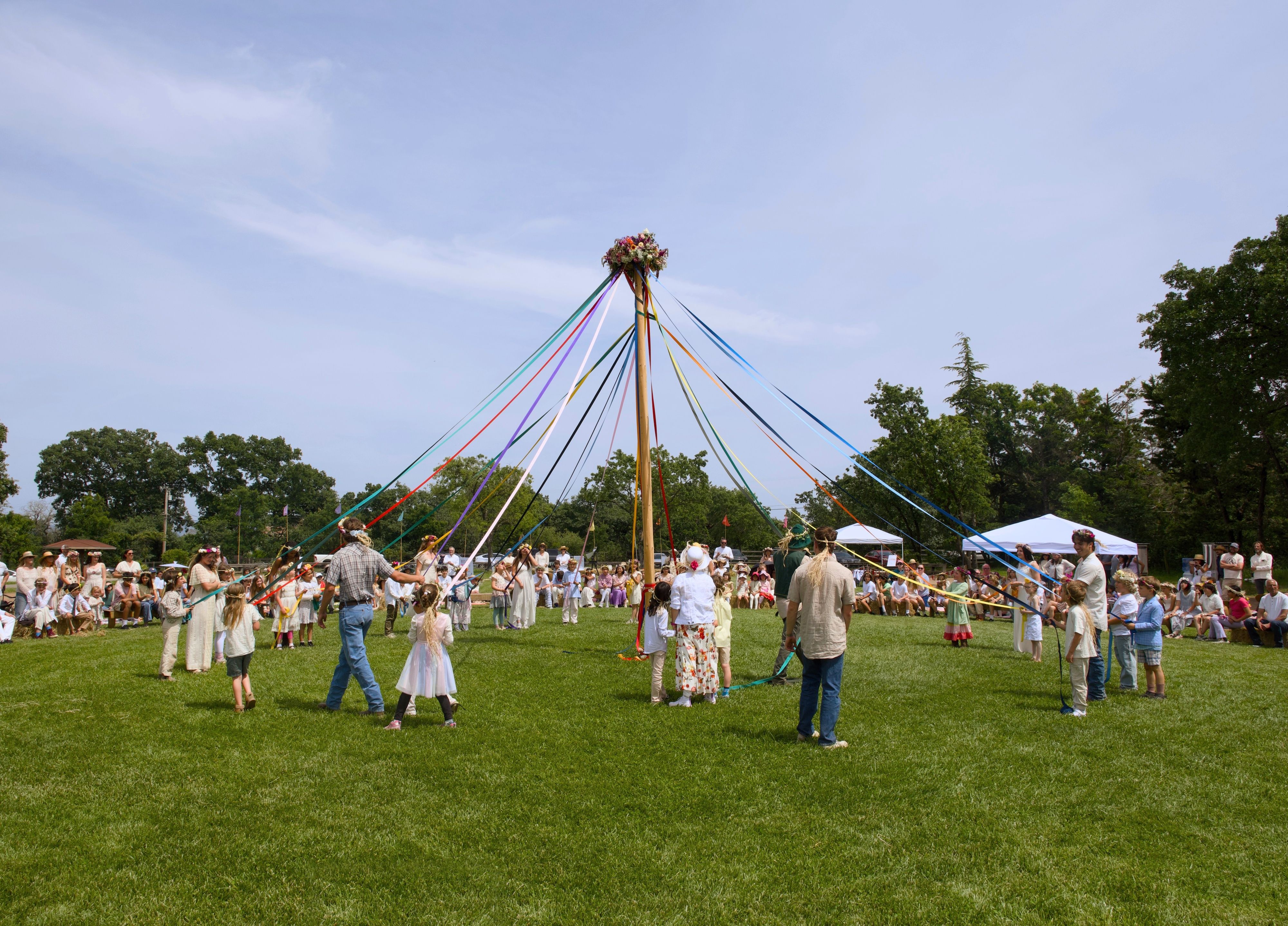
The senior class and their first-grade buddies dance ribbons around the flower-crowned maypole at May Faire

Board of Directors

  • Gavin Carothers, President
  • Ed Fletcher, Secretary
  • Jenny Kenyon, Treasurer
  • Elena Bass
  • Jason Edwards
  • Lisa Hensley
  • Elizabeth Kaiser
  • Casey McCarroll
  • Stacy Ito
  • Catherine Schlager
  • Tricia Walker
  • Isabel Wundsam

Letter from the All-School Director

Joshua Wilson, All-School Director

Dear Summerfield Community,

I want to offer a few reflections on this past year at Summerfield Waldorf School and Farm. Although I was not here during the 2025–2026 school year to experience these moments firsthand, spending my first few months reviewing the hard work of our faculty, staff, board, and families has given me a deep appreciation for this community.

The year began under unique circumstances, with my predecessor announcing her departure and launching a yearlong, nationwide search for a new All-School Director. Through the rigorous work of our board and a search firm, plus the contributions of faculty, staff and families, that process brought me here. I step into this role with immense gratitude for the foundation laid during a time of significant transition and courageous decision-making.

Last year also required Summerfield to confront tough financial realities head-on. Through careful sacrifices, program restructuring, and difficult staffing decisions, our team turned an expected deficit of about $345,000 into a positive balance by the end of the fiscal year. While we had to reduce two lower school subject positions, eliminate one, and close one preschool class to right-size our early childhood program, we also invested wisely in our future by adding a Grades 1–3 Assistant to support some of our youngest students and build a clear pathway for future class teachers.

Beyond balancing our budget, our faculty spent significant time rethinking how and what we teach. Guided by a new High School Coordinator and Core Group, our high school faculty met intensively to reimagine secondary education. Their work was grounded in practical stewardship, with high school students and faculty devoting two hours a week for 11 weeks to revitalizing our permaculture garden. A major outcome of this collective endeavor was a redesigned bell schedule—now active this fall—built specifically for deeper focus in the age of AI by reducing the number of daily class periods and lengthening instructional time. Crucially, the new schedule aligns lower school and high school periods. This structure allows high school faculty to support 7th and 8th graders, reinforcing the developmental arc from Grades 7 through 10, with a special emphasis on fine and practical arts.

We also took close care of our physical spaces. We completed a new Aftercare pavilion to support that program’s expanded enrollment, refinished the floors in Sophia Hall, and took care of urgent septic repairs. On our grounds, we faced the loss of four majestic oak trees to beetles while actively treating two others to preserve our canopy. Through it all, operations remained steadfast, supported by the spring return of our Admissions Director from maternity leave and the successful hiring of two new Lower School Class Teachers and a Lower School Coordinator who joined us this fall.

Looking ahead, we move forward on firmer financial footing and with a strong sense of purpose. As All-School Director, my goal is to lean fully into what makes Summerfield so special. We will leverage our freedom as an independent school to deepen our field trip curriculum and pilot pedagogical innovations. We will highlight and enhance our unique role as the only school in Sonoma County providing an integrated education from infancy through 12th grade on a single campus. And we will continue to center our working farm as an unmatched living classroom.

Thank you for your devotion to Summerfield. I look forward to building on this strong foundation together in the year ahead.

Sincerely,

Joshua Wilson All-School Director

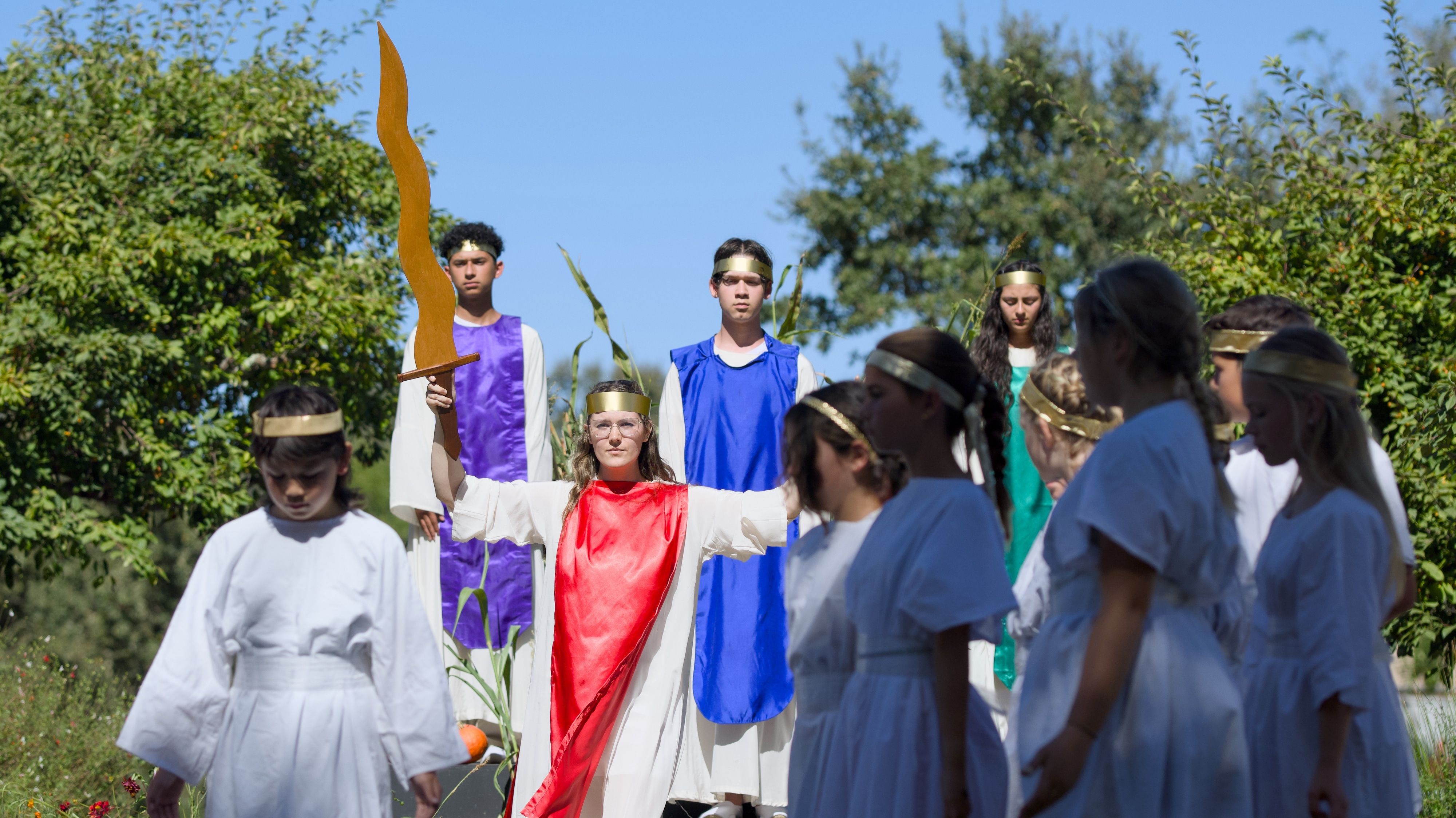
Students in costume at the Michaelmas pageant, with the Archangel Michael raising a golden sword

From the Board President

Dear Summerfield Community,

Summerfield closed 2025–26 with a small operating surplus of $67,716 against a budgeted deficit of $345,593. This is encouraging, though some of the reasons we reached balance were unplanned.

The biggest change this year was welcoming Joshua Wilson as All-School Director this summer, succeeding Kalen Wood. We thank Kalen for leading with care and dedication. The Board interviewed more than 12 candidates, and parents met the finalists in three separate sessions before the Board selected Joshua. He comes ready to listen and learn, having led Camellia Waldorf School in Sacramento since 2021, where enrollment grew by more than fifty percent. His letter precedes this one.

Income was about $175,000 above budget, including $94,000 from auxiliary programs, $38,000 from net tuition, and $36,000 from annual giving. That is an overrun we will happily welcome every year. Expenses were about $239,000 below budget: salaries and benefits were $154,000 under, and administration and facilities were $96,000 under. Programs and supplies looks overspent, but the budget counts much of that spending under miscellaneous; together the two lines came in on budget. The “Operating summary (budget view)” gives the full figures.

Some salary savings came from the teaching position that remains unfilled. It is great to have Don Basmajian and Sieglinde Basmajian continuing to team teach last year’s first and fifth grades, now second and sixth. We are grateful for their care for both classes. We know this arrangement must be well supported, and the team teaching ends after this year.

Our three-year plan called for cutting the deficit in half each year, to $500,000 in 2024–25 and $250,000 in 2025–26, and a balanced budget in 2026–27. We did better than planned in 2025–26, partly by luck. We did not reach the goal for 2026–27: the approved budget has a deficit of $103,175. That budget cuts spending by $193,000 from last year’s budget, but plans to spend $45,000 more than we actually did in 2025–26, because some of last year’s savings could not be sustained. The chart after this letter shows our progress from a $638,339 deficit in 2024–25 through 2025–26’s small operating surplus to the deficit budgeted for 2026–27. This fall, 2026–27 enrollment is 258 students, down from 269 a year earlier and against 262 in the budget. Enrollment below budget adds pressure to our finances.

We are working to grow enrollment and close the gap. We are aligning middle school programming with the high school, with more high school teachers teaching in the middle school. Distinction Scholarships recognize new students entering Grades 9–12 for strengths in social leadership, academics, arts, or athletics; combined with need-based tuition assistance, they can cover up to full tuition. Saturday Studios offer middle school students three-hour workshops at the high school, including creative writing and programming. We are also expanding how we think about tuition assistance as a way to fill small classes and increase revenue. An empty seat earns and provides nothing; assistance that fills that seat helps both the family and the school. These efforts are underway, and their effect on enrollment remains to be seen.

The operating result is the most useful measure of the year. The “Statement of activities,” prepared under standard nonprofit accounting rules, also shows our continued underinvestment in the campus. Net assets fell $273,414, mostly because depreciation—the yearly wearing-out of buildings and equipment—was $380,401, far above the $102,513 spent on improvements. These included resurfacing the basketball court, tree work, and the aftercare pavilion. Spending less on buildings and grounds saves cash today. Continued underinvestment creates problems over time.

On July 1, 2026, the first day of the new fiscal year, we repaid both Bank of Marin loans when they came due: $2,335,638 in principal, totaling $2,341,879 with interest and fees. With interest rates substantially higher and favorable refinancing terms unavailable, the Board directed repayment. The Finance Committee approved drawing the money from the school’s investment account, funded by the Extraordinary Gift, an unrestricted gift of about $4 million the school received in 2022–23. These funds were unrestricted; no donor-restricted money was used. Summerfield now has no bank debt.

Repayment removes about $75,000 in annual loan interest expense. It also removes most of the interest earned on that cash: budgeted interest income for 2026–27 is about $50,000, down from about $162,000 in 2025–26. “Events after year-end” explains the payoff. During 2025–26, the Board designated $1,000,000 of unrestricted net assets as a reserve for the school’s long-term stability, to be kept intact rather than spent on operations. The Board is still deciding how to hold and manage it. The payoff left that reserve intact.

Most of all, thank you. Our community gave $236,407 to annual giving in 2025–26, 27% more than the year before and well past what we budgeted. That generosity shows up in every classroom, festival, and corner of the farm, and we are deeply grateful for every gift. That same year, the school provided $1,082,816 in tuition assistance and emergency aid. Thank you also to our faculty and staff for the care and work you bring to Summerfield each day. And congratulations to the class of 2026 on their graduation.

The Board remains committed to bringing our budget into balance and addressing the needs of our campus. We have more work to do, and we are grateful to be doing it with this community.

Gavin Carothers President of the Board

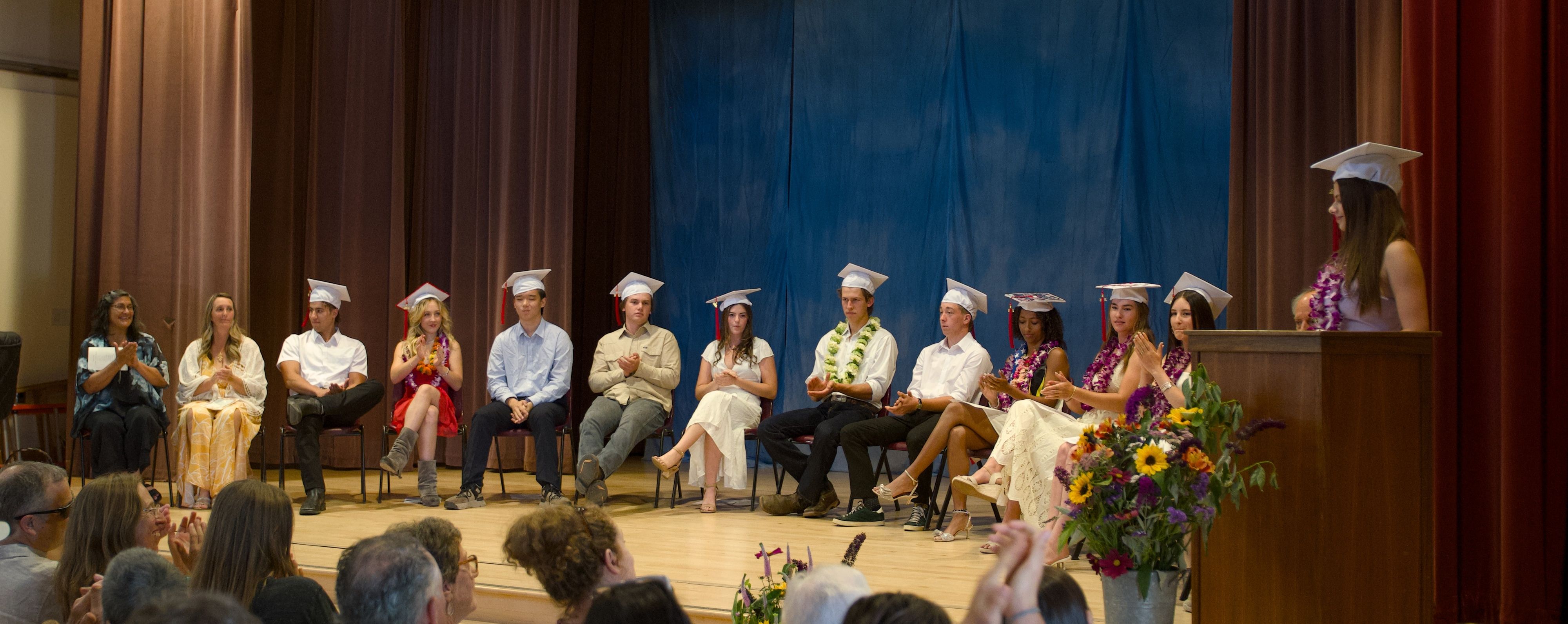
The class of 2026 on stage at graduation, as a classmate speaks from the podium
Operating results against the three-year plan
Bar chart of planned, budget, actual operating results by fiscal year, FY 2024–25 to FY 2026–27. The figures are in the table below. ($500K) ($750K) ($638K) ($250K) ($346K) $68K $0 ($103K) FY 2024–25 FY 2025–26 FY 2026–27
  • Planned
  • Budget
  • Actual
Operating results by fiscal year
Fiscal year PlannedBudgetActual
FY 2024–25 ($500,000) ($750,000) ($638,339)
FY 2025–26 ($250,000) ($345,593) $67,716
FY 2026–27 $0 ($103,175)

The year in numbers

students enrolled at the start of 2025–26
269
in tuition assistance and emergency aid in 2025–26
$1,082,816
raised in annual giving in 2025–26
$236,407
annual giving goal for 2026–27
$200,000
increase in annual giving from 2024–25
27%
in bank loans repaid on July 1, 2026
$2,335,638
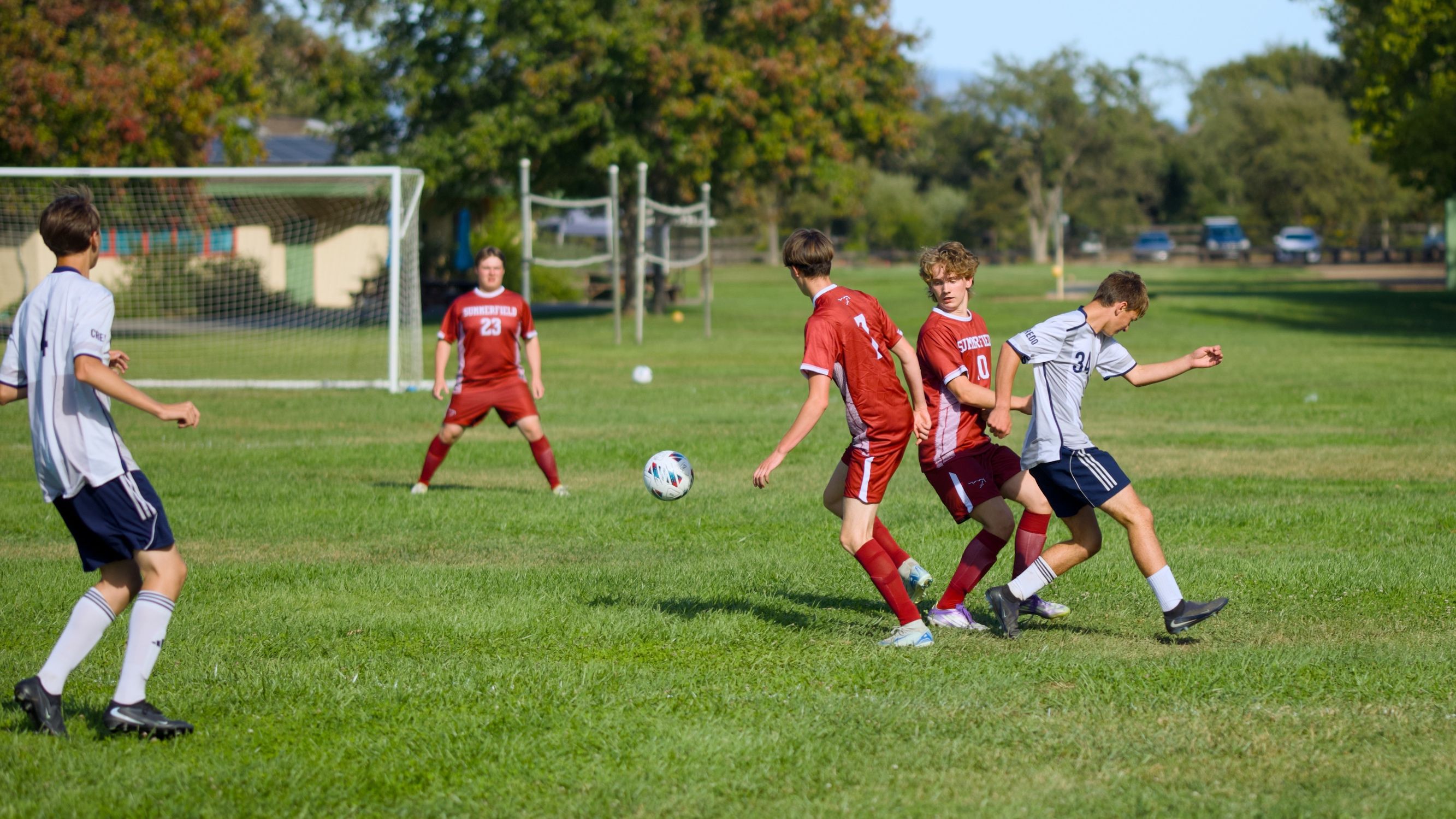
Summerfield Mustangs in red chase the ball during a soccer match

Community Enrichment Committee

Summerfield’s Community Enrichment Committee strives to bring the magic of Waldorf education from classroom to community via our cornerstone festivals and other joyful, spirited events throughout the school year. Formed in 2024, the CEC supports the school’s mission by strengthening community life, stewarding traditions and encouraging family involvement.

Peppermint cupcakes piled with marshmallows and candy canes at the Winter Faire

Major events on our calendar include October’s Sprites Night, December’s Winter Faire, January’s Epiphany Bonfire and our end-of-year May Faire. Each festival offers an opportunity for parents, grandparents and special friends to experience our beautiful campus and the fellowship that comes from participating in life through a Waldorf lens. Our children benefit from this privilege, too, by living a full and friendly childhood in the presence of grown-ups who care deeply for their academic, emotional, physical and social well-being.

The CEC does not only host festivals. Other events under our umbrella include stand-alone hangouts such as Contra Dance Night and Family Game Night, and we endeavor to expand and make regular these supplemental chances to socialize.

A paper snowflake hangs from a bare branch over the Winter Faire

We believe strongly that the school’s long-term sustainability is rooted in the larger community’s enjoyment of one another through fun, classic events that dovetail into our children’s curriculum and the Waldorf pedagogy and aesthetic. We believe a robust event calendar offers the best chance at expanding enrollment and strengthening the financial health of our beloved school.

On a day-to-day level, the CEC is responsible for the planning, preparation and execution of each event. We coordinate with the administration and faculty to understand historical precedent while bringing fresh eyes and parent perspective into the mix. Everything from decor and signage to parking and concessions ultimately falls under our purview.

We make ghosts from dryer balls covered in white silks. We construct redwood signposts. We tie narrow, hand-cut fabric strips to jute rope to divide our May Faire games and crafts, revealing a rippling-in-the-wind rainbow across the grassy field around the maypole. CEC volunteers have wrestled with tomato-cage ghosts, wine-bottle snowmen and ribbon-adorned embroidery hoops.

A wine-bottle snowman in a felt top hat and blue scarf at the Winter Faire

The 2025–26 school year represented a new phase for the CEC. Changes within the school’s org chart allowed for a refreshed structure, with 2nd grade parents Jackie Munyon and Lauren Spates assuming formal CEC management as co-chairs.

Over the past 12 months, under Jackie and Lauren’s leadership, parent satisfaction and volunteerism have grown. For example, the 2024 Winter Faire saw a handful of parents step up to help with the broader campus preparation; the 2025 festival saw 45 people volunteer beyond their class-related responsibilities. We are enormously proud of the foundation we’re laying.

A sugar-dusted raisin bundt cake, cut open, at the Winter Faire

The CEC looks forward to providing an improved event experience year-over-year, ensuring that our festivals and events are not to be missed.

We hope — with deep conviction — that current and prospective students and their families all have a chance to experience the magic that is Summerfield.

To volunteer or share an idea, email the CEC at community@summerfieldwaldorf.org.
Giving to Summerfield

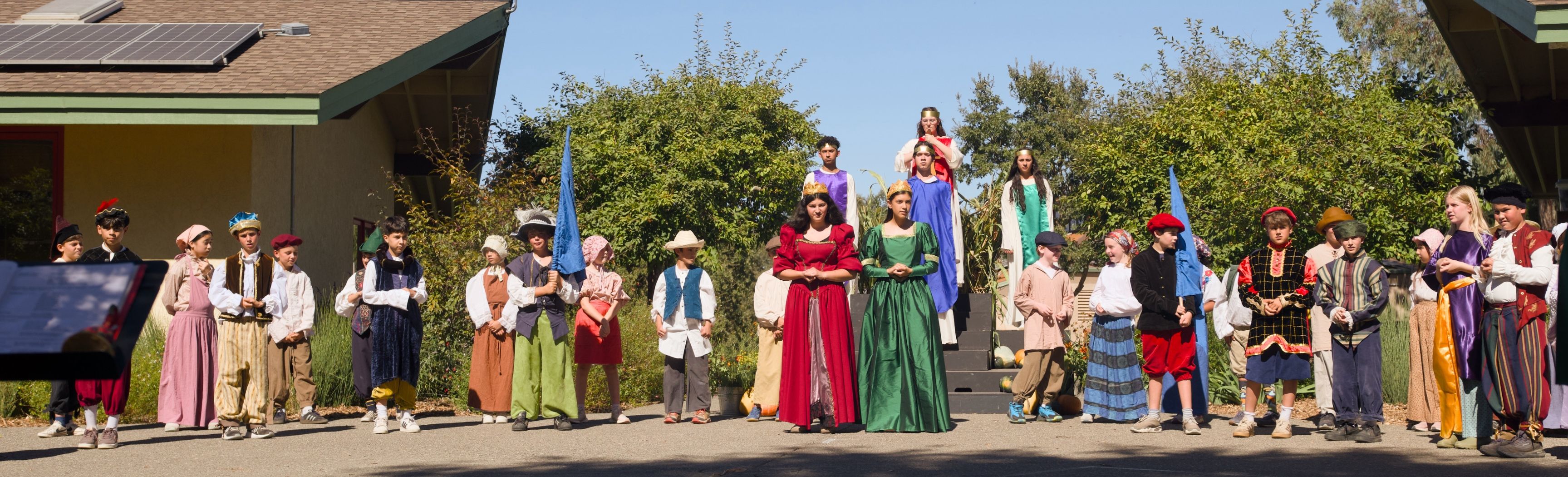
Michaelmas pageant performers in costume outside the school buildings

Sustained by All of Us

At Summerfield, giving is one of the ways we care for this place and for one another. Gifts of many sizes help sustain our school.

Thank you to everyone who gave to the Annual Giving Campaign in 2025–26. Together, you contributed $236,407, 27% more than the year before. Nearly 75% of individual gifts were under $1,000, and the median gift was $200. Giving came in $36,407 above its goal, and that difference was a real part of how the school closed a budgeted deficit of $345,593 and finished the year with a small surplus. We are grateful for the care behind every gift.

Our 2026–27 goal is $200,000, the same as last year’s goal. The Board kept it at an amount the budget can count on, rather than raising it after a strong year.

What Giving Makes Possible

This fall’s Annual Giving Campaign highlights four areas: tuition assistance, our biodynamic farm, the farm curriculum, and the fine and practical arts. Every gift supports the whole school and farm.

Tuition assistance shapes our community and the breadth of perspectives our children encounter here.

“When students learn alongside peers from different socioeconomic backgrounds and life experiences, everyone’s world becomes a little bigger.”

— Annalyse Jorgensen, Admissions Director

For many families who receive it, assistance is what puts a Summerfield education within reach.

“What sets Summerfield apart is how the curriculum truly meets children where they are—emotionally as well as academically. Because their development is honored at every transitional stage, we’ve watched our kids become deeply rooted in who they are, navigating life with real agility. We’re profoundly grateful for the tuition assistance program to make Summerfield’s Waldorf program accessible for our family.”

— A Summerfield parent

Take Part in Annual Giving

We invite you to give at a level that works for you. For families who are able, a gift equivalent to one month’s tuition is a guideline, not a minimum. Gifts of every size are meaningful, and every participating community member brings us closer to our shared goal of 100% participation.

Please make a gift or pledge through Veracross by December 4. Pledges may be paid through May 31, 2027. You can also reach the gift form at summerfieldwaldorf.org/annual-giving-campaign.

$hop $avvy and Farm to Feast, on May 22, 2027, offer other ways to take part during the year. This fall, we invite you to support Annual Giving.

Join Us at a Board Meeting

Community members are warmly welcome at monthly board meetings, held on the third Monday, 6:30–8:30pm, in Sophia Hall. In January and February 2027, we meet on the second Monday: January 11 and February 8. Interested in serving on the board? Email board@summerfieldwaldorf.org.

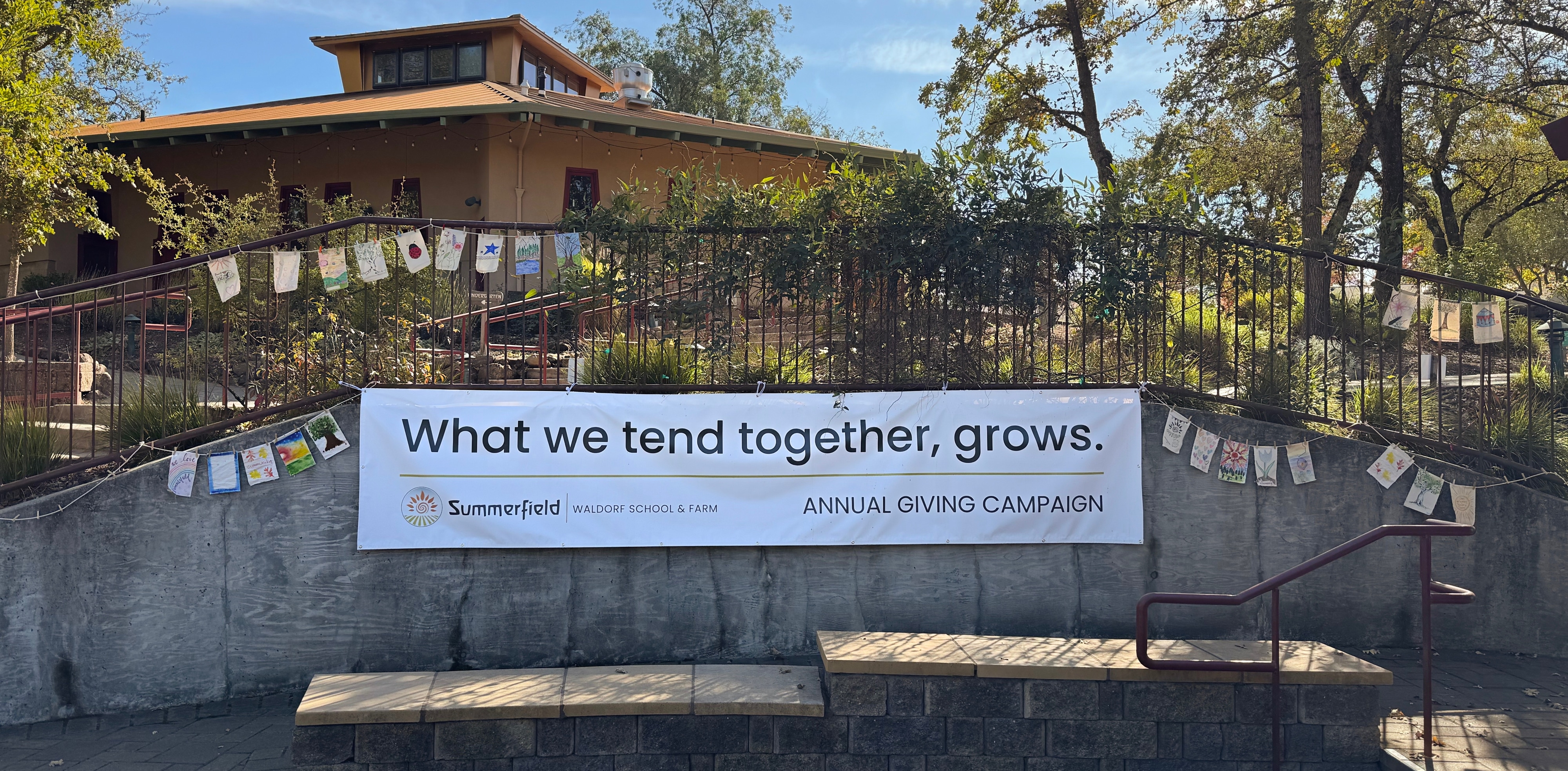
The Annual Giving Campaign banner at the front of the school

The 2026–27 Budget

The Board-approved budget raises tuition by an average of 7% because tuition still falls short of the full cost of educating each child. Running the school costs more each year, especially paying and caring for faculty and staff. The increase helps us work toward a balanced budget.

The budget provides more tuition assistance this year. Partway through last year’s tuition assistance cycle, we began targeting assistance to specific classes, especially smaller ones, and managing it class by class, with no single school-wide cap, so that it stays sustainable. We are continuing that approach in the current cycle. That keeps Summerfield within reach for families who need help and brings children into classes that need them, strengthening those classes and contributing to the school’s income.

Faculty and staff will receive a 2.5% cost-of-living increase because living costs in our area continue to rise for the people who teach and care for our children. Benefits cost more per person, mostly because we have changed how we estimate them. The budget now draws on more recent years of the school’s actual medical costs, for example, so it better reflects what benefits really cost. We continue to contribute to retirement plans.

With a smaller development office, the Board has lowered expected fundraising income to an amount it believes it can count on. Annual giving retains last year’s goal. We have also budgeted income from aftercare, camps, and after-school programs below last year’s receipts so our spending commitments do not depend on repeating a strong year.

Repaying the bank loans removes loan interest expense and leaves less cash earning interest, with lower rates also expected to reduce interest income.

Facilities spending increases to keep the campus safe and running, covering the routine treatment that keeps naturally occurring arsenic in our well water within drinking-water standards, a fire-system rate increase, higher utility costs, and tree care. Reductions elsewhere in administration bring its overall cost below last year’s budget, even as insurance and database costs rise.

These choices leave a modest planned deficit: higher tuition income does not fully cover lower interest income, conservative fundraising and program estimates, and higher costs per person. We still have work to do to bring the budget into balance. Full figures appear in the “Operating summary (budget view)” table in the financial statements.

Financial statements

Fiscal year 2025–26, ended June 30, 2026.

Operating summary (budget view)
Line item FY 2025–26 Budget FY 2025–26 Actual FY 2026–27 Budget
Income
Net tuition and fees
Tuition and fees 6,776,875 6,800,148 7,092,650
Tuition assistance (1,145,000) (1,056,146) (1,220,000)
Emergency tuition assistance (35,000) (26,670) (32,500)
Tuition remission and other discounts Tuition remission is reduced tuition for the children of faculty and staff. (657,259) (740,047) (663,014)
Net tuition and fees $4,939,616 $4,977,285 $5,177,136
Annual giving 200,000 236,407 200,000
Fundraising 185,000 172,183 111,500
Auxiliary programs 714,000 808,403 724,000
Interest income 170,000 161,845 49,830
Other income 46,300 73,532 41,800
Total income $6,254,916 $6,429,655 $6,304,266
Expenses
Salaries and benefits 5,110,629 4,956,640 5,096,561
Programs and supplies 133,200 326,895 124,200
Fundraising 72,500 90,479 52,500
Administration and facilities Insurance, technology, marketing, facility upkeep, utilities, and staff recruitment 870,780 775,103 820,480
Loan interest 75,000 74,539 —
Miscellaneous 338,400 138,283 313,700
Total expenses $6,600,509 $6,361,939 $6,407,441
Operating result ($345,593)$67,716($103,175)

Totals may not add due to rounding.

Where operating income came from, FY 2025–26 Actual
Stacked bar, where operating income came from, FY 2025–26 Actual: Net tuition and fees 77%, Annual giving 4%, Fundraising 3%, Auxiliary programs 13%, Interest income 3%, Other income 1%.
  • Net tuition and fees: $4,977,285 (77%)
  • Annual giving: $236,407 (4%)
  • Fundraising: $172,183 (3%)
  • Auxiliary programs: $808,403 (13%)
  • Interest income: $161,845 (3%)
  • Other income: $73,532 (1%)
Where operating expenses went, FY 2025–26 Actual
Stacked bar, where operating expenses went, FY 2025–26 Actual: Salaries and benefits 78%, Programs and supplies 5%, Fundraising 1%, Administration and facilities 12%, Loan interest 1%, Miscellaneous 2%.
  • Salaries and benefits: $4,956,640 (78%)
  • Programs and supplies: $326,895 (5%)
  • Fundraising: $90,479 (1%)
  • Administration and facilities: $775,103 (12%)
  • Loan interest: $74,539 (1%)
  • Miscellaneous: $138,283 (2%)
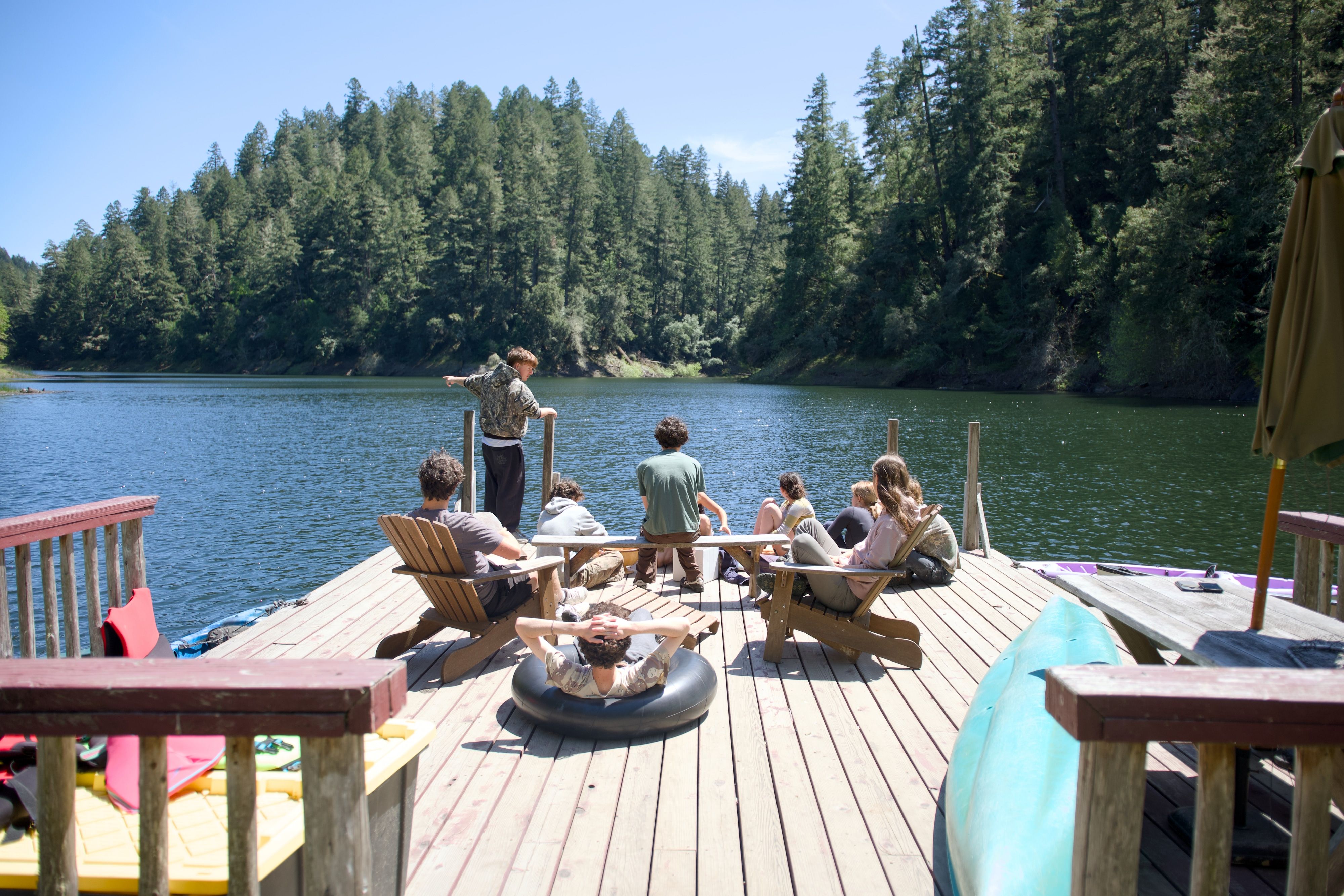
The 11th grade relaxes on the dock at Leonard Lake Reserve after rehearsing their class play
Statement of financial position
Line item June 30, 2025 June 30, 2026
Assets
Cash and investments 4,589,249 4,466,832
Receivables and prepaid expenses 115,108 131,522
Property and equipment, net 5,694,539 5,416,651
Other assets 9,158 8,948
Total assets $10,408,054 $10,023,953
Liabilities
Payables and accrued expenses 343,418 329,770
Deposits and payments received in advance 842,860 812,773
Bank loan, net of loan costs 2,402,590 2,335,638
Funds held for others — —
Other liabilities — —
Total liabilities $3,588,868 $3,478,181
Net assets without donor restrictions
Net assets without donor restrictions 6,584,431 6,294,232
Total net assets without donor restrictions $6,584,431 $6,294,232
Net assets with donor restrictions
Net assets with donor restrictions 234,756 251,540
Total net assets with donor restrictions $234,756 $251,540
Total net assets $6,819,187$6,545,772
Total liabilities and net assets $10,408,054$10,023,953

Totals may not add due to rounding.

Most money the school receives can be used wherever it is needed. Some gifts must serve a donor’s chosen purpose or be kept permanently, with only earnings used. The Board also sets aside reserves; these have no donor restrictions, and the Board can change their designation.

Article IX, Section 6 of the bylaws requires the annual report to show “trust funds” and how they changed. The table below lists these funds, each fund’s purpose, its balance at the start and end of the fiscal year, and changes during the year.

The Business Office and the school’s auditors are reviewing how each fund is classified. For this year, we are reporting figures using the classification from the 2024–25 audit. Next year’s report will use the review’s findings to change how the funds are presented.

Trust funds
Fund and purpose Type June 30, 2025 June 30, 2026
Gymnasium Field house, redirected to the basketball court covering Nothing spent in 2025–26. Donor-restricted, purpose or time $115,125 $115,125
Class funds and after-school programs Each class's and club's fundraising, held for its own activities and trips Kept for each class's activities and trips. Donor-restricted, purpose or time $35,400 $42,461
Auxiliary program Donor gift for auxiliary programs No change in 2025–26. The 2025–26 audit will determine whether this gift paid for the $11,246 aftercare awning; if it did, the balance falls by that amount. Donor-restricted, purpose or time $28,665 $28,665
Other projects Donor-designated funds for smaller school projects, including the drama fund Received $138 for the drama fund in 2025–26. Donor-restricted, purpose or time $16,689 $16,827
Lower School supplies Lower School supplies and athletics events Pentathlon and track meet receipts of $4,380, less $3,988 of costs, in 2025–26. Donor-restricted, purpose or time $11,661 $12,053
Program gifts and grants Gifts and grants for specific school programs, including faculty development and athletics Gifts and grants for faculty development and school programs; $11,833 received and $2,640 spent in 2025–26. Donor-restricted, purpose or time $3,510 $12,703
RSF endowment Permanent endowment held with RSF Social Finance; the original gift terms have not been found Held since before 2006; the original gift documents have not been found. The school keeps the gift intact and uses its interest, about $900 a year, for tuition assistance. Donor-restricted, permanent $23,706 $23,706
Total donor-restricted Net assets with donor restrictions on the statement of financial position $234,756 $251,540
Board-designated reserve Reserve for the school’s long-term stability From the Extraordinary Gift. Unrestricted by the donor; in 2025–26 the Board designated $1,000,000 as a reserve, to be kept intact rather than spent on operations. Board-designated — $1,000,000

Totals may not add due to rounding.

Statement of activities
Line item Without donor restrictions With donor restrictions Total
Revenue and support
Net tuition and fees 5,674,570 — 5,674,570
Contributions and annual giving 252,601 11,833 264,434
Other fundraising revenue 156,658 — 156,658
Auxiliary program revenue 786,146 56,751 842,898
Investment income / gain or loss 162,781 — 162,781
Other revenue / gains 72,614 — 72,614
Net assets released from restriction 51,800 (51,800) —
Total revenue and support $7,157,170 $16,784 $7,173,954
Expenses
Salaries and benefits 5,600,377 — 5,600,377
Programs and supplies 168,007 — 168,007
Fundraising expenses 89,096 — 89,096
Administration and facilities 854,565 — 854,565
Loan interest 74,539 — 74,539
Depreciation and amortization 393,326 — 393,326
Other expenses / losses 267,457 — 267,457
Total expenses $7,447,368 — $7,447,368
Change in net assets ($290,198)$16,784($273,414)
Opening net assets $6,584,431$234,756$6,819,187
Opening adjustments ———
Closing net assets $6,294,232$251,540$6,545,772

Totals may not add due to rounding.

How the two statements differ

The operating summary shows a surplus of $67,716; the statement of activities shows net assets without donor restrictions falling $290,198. The statement of activities follows standard nonprofit accounting. Its income is $727,515 higher and its expenses before depreciation and amortization are $692,103 higher, mostly because it counts faculty and staff tuition remission both as tuition earned and as a benefit paid to staff, and partly because it groups some other items differently. It also includes depreciation and amortization of $393,326, which the operating summary leaves out. Donor-restricted gifts and spending add $16,784, for a total change in net assets of ($273,414).

How these figures were prepared

Following standard U.S. nonprofit accounting rules, income counts when earned and costs when incurred, regardless of when cash changes hands. June 30, 2025 figures come from audited statements (Lantan & Associates, report dated February 10, 2026). Unaudited 2025–26 figures include year-end updates to the school’s books through October 2026. The audit is underway and expected to finish by January 31, 2027; figures may change.

Loan costs

None remained. The last $12,926 of loan costs was amortized during 2025–26, so the June 30, 2026 loan balance ($2,335,638) equals the principal repaid on July 1, 2026.

Property and equipment

Property and equipment, net, fell from $5,694,539 to $5,416,651 during 2025–26: depreciation of $380,401 exceeded $102,513 of improvements, including resurfacing the basketball court, tree work and the aftercare awning.

Changes in assets

Total assets fell $384,101, to $10,023,953. Cash and investments fell $122,417, and property and equipment fell $277,888 as depreciation exceeded improvements.

Changes in liabilities

Total liabilities fell $110,687, to $3,478,181: the bank loan fell $66,952 (scheduled principal payments of $79,878, less the last $12,926 of loan costs amortized), deposits and payments received in advance fell $30,087, and payables fell $13,648. The remaining loan was repaid on July 1, 2026.

Changes in funds

Donor-restricted net assets rose $16,784, to $251,540: $68,584 of restricted gifts and class and after-school proceeds, less $51,800 spent for their purposes. During the year the Board designated $1,000,000 of unrestricted net assets as a reserve for the school’s long-term stability. See Trust funds.

Financial information compiled by Lisa Hensley, Director of Operations, with Gavin Carothers, Board President, October 2026.

Events after year-end

Bank of Marin loans repaid in full · July 1, 2026

The school's two Bank of Marin loans, secured by a deed of trust on the campus, came due on July 1, 2026. The school repaid them in full instead of refinancing.

What was paid
Principal$2,335,638
Interest$6,014
Fees$227
Total paid$2,341,879

Where the money came from: The school's Exchange Bank investment account, funded by the Extraordinary Gift; unrestricted money. Approved by the Finance Committee. No donor-restricted money was used, and the $1,000,000 Board-designated reserve remains intact.

Before and after
Balance Before (June 30) After the payoffcalculated
Owed to the bank $2,335,638 $0
Cash and investments $4,466,832 about $2,125,000
of which the Board-designated reserve $1,000,000 $1,000,000

What changes: the 2026–27 budget has no loan interest ($74,539 last year), and $49,830 of interest income ($161,845 last year), largely because the invested money went to repay the loans.

Required disclosures and officer's certificate

School leaders’ financial interests and payments

Our bylaws (Article IX, Section 7) require this annual disclosure so members can see whether school leaders had a financial stake in school business or received help with legal costs arising from their roles. It reports any transaction over $20,000, alone or combined with others involving the same person, in which a director or officer had a financial interest, and any payments or advances totaling more than $10,000 for a director’s or officer’s legal costs, unless members already approved them.

During the fiscal year, there were no transactions and no payments or advances for legal costs that required disclosure under this section.

Officer's certificate

To meet annual reporting obligations, the financial figures in this document were prepared directly from Summerfield Waldorf School and Farm's official books and records without audit. The school’s annual independent financial audit is in progress and will supersede these preliminary figures upon completion.

Gavin Carothers Board President October 27, 2026

Colophon

Photos by Oliver Carothers, Class of 2027.

Made with open-source software, with thanks to the projects behind it: Astro, Tailwind CSS, Sveltia CMS, ExcelJS, and WeasyPrint. Set in Poppins, the school’s brand typeface, by the Indian Type Foundry.